Samstag, 9. Juni 2018
Qualität in Museen - Tagungsband erschienen
Woran
erkennt man die Qualität eines Museums? Diese Frage stand im
Mittelpunkt einer internationalen Tagung, die der Landschaftsverband
Westfalen-Lippe (LWL) in Kooperation mit dem Institut für
Museumsforschung und dem Deutschen Museumsbund im Oktober
2014 im LWL-Museum für Kunst und Kultur in Münster organisierte. Der Tagungsband ist unlängst erschienen und wird zudem im PDF-Format unter https://www.qualitaet-in-museen.lwl.org zur Verfügung gestellt.

Handreichung Strategisches Management – Ansätze für die strategische Museumssteuerung
Ergebnisdokumentation der gleichnamigen Arbeitsgruppe im Arbeitskreis Verwaltungsleitung des Deutschen Museumsbunds e.V.: https://www.museumsbund.de/wp-content/uploads/2018/05/handreichung-strategisches-management-online.pdf
Google stellt Ethik-Regeln für die Entwicklung künstlicher Intelligenz auf
Google will künftig bei der Entwicklung von Systemen mit künstlicher
Intelligenz (KI) selbst auferlegte Ethik-Regeln befolgen, um seiner
Verantwortung als führendes Unternehmen in der KI-Entwicklung
nachzukommen. Das gab Google-Chef Sundar Pichai in einem Blog-Beitrag am
Donnerstag bekannt.
Ein Kernpunkt dieser Regeln ist der Verzicht, KI-Technologien für Waffensysteme zu entwickeln und bereitzustellen, wie es derzeit noch beim Militär-Projekt Maven in Kooperation mit dem US-Verteidigungsministerium der Fall ist. Google wolle aber weiterhin mit Regierungsstellen zusammenarbeiten – auch mit dem Militär, sofern es sich beispielsweise um humanitäre Projekte wie "Search an Rescue" oder die Gesundheitsversorgung von Veteranen handle. ... [mehr] https://www.heise.de/newsticker/meldung/Google-stellt-Ethik-Regeln-fuer-die-Entwicklung-kuenstlicher-Intelligenz-auf-4074342.html
Ein Kernpunkt dieser Regeln ist der Verzicht, KI-Technologien für Waffensysteme zu entwickeln und bereitzustellen, wie es derzeit noch beim Militär-Projekt Maven in Kooperation mit dem US-Verteidigungsministerium der Fall ist. Google wolle aber weiterhin mit Regierungsstellen zusammenarbeiten – auch mit dem Militär, sofern es sich beispielsweise um humanitäre Projekte wie "Search an Rescue" oder die Gesundheitsversorgung von Veteranen handle. ... [mehr] https://www.heise.de/newsticker/meldung/Google-stellt-Ethik-Regeln-fuer-die-Entwicklung-kuenstlicher-Intelligenz-auf-4074342.html
The Surprising Literary History of Skin Care / Gavin Francis In: The Paris Review June 7, 2018
In Mikhail Bulgakov’s novel The Master and Margarita, there’s
a scene of miraculous rejuvenation accomplished by a magical cream.
Margarita Nikolaevna, a thirty-year-old woman, is sitting on a bench in
Moscow’s Alexander Gardens when a suspicious fang-toothed man (later
revealed as an agent of Satan) presents her with a golden casket, heavy
and ornate as a reliquary. He tells her to wait until exactly half past
eight that evening before opening it and applying the contents to her
skin. For reasons too complicated to summarize, she agrees.
At 8:29 P.M., Margarita can’t wait any longer: she lifts the heavy box of gold and opens the lid. The cream is yellowish and oily and gives off the aroma of earth, marshland, and forest. She begins rubbing it into her forehead and cheeks, where it is absorbed quickly and greaselessly, producing a tingling effect over her skin. Then she looks in the mirror and drops the casket in shock.
Her eyes have changed color to green, and her eyebrows have grown from narrow, plucked lines into perfect symmetrical arcs. A worry line between them has vanished. Shadows around her temples and “barely detectable sets of crowsfeet” have disappeared. The skin of her cheeks begins to glow pink, her forehead becomes pale and perfectly smooth, and the artificial waves in her hair are loosened into flowing natural-looking curls. She laughs with glee, throws off her bathrobe, and begins to rub the cream all over her naked body. A tense headache that had bothered her since her meeting in the gardens disappears; her arms and legs grow stronger and firmer. Jumping into the air with joy, she sinks slowly and elegantly back to earth, as if being lowered by angels. The cream has granted her the power of flight.
Bulgakov was trained as a doctor, and his book brims with vivid clinical details: of blood spurting at a beheading, of a gently persuasive psychiatric interrogation, of the grinding crunch of a leg being severed. He brings the same attentiveness to the effects of the cream. As a physician, he must have known that creams in the real world can only slow the inevitable process of aging, never reverse it. To keep skin looking youthful, what you avoid is more important than what you rub on—smoking, unhealthy food, and sun exposure all add years to the skin. Once its natural elasticity has started to fade, there’s no cream on earth that can restore it. ... [mehr] https://www.theparisreview.org/blog/2018/06/07/the-surprising-literary-history-of-skin-care/
At 8:29 P.M., Margarita can’t wait any longer: she lifts the heavy box of gold and opens the lid. The cream is yellowish and oily and gives off the aroma of earth, marshland, and forest. She begins rubbing it into her forehead and cheeks, where it is absorbed quickly and greaselessly, producing a tingling effect over her skin. Then she looks in the mirror and drops the casket in shock.
Her eyes have changed color to green, and her eyebrows have grown from narrow, plucked lines into perfect symmetrical arcs. A worry line between them has vanished. Shadows around her temples and “barely detectable sets of crowsfeet” have disappeared. The skin of her cheeks begins to glow pink, her forehead becomes pale and perfectly smooth, and the artificial waves in her hair are loosened into flowing natural-looking curls. She laughs with glee, throws off her bathrobe, and begins to rub the cream all over her naked body. A tense headache that had bothered her since her meeting in the gardens disappears; her arms and legs grow stronger and firmer. Jumping into the air with joy, she sinks slowly and elegantly back to earth, as if being lowered by angels. The cream has granted her the power of flight.
Bulgakov was trained as a doctor, and his book brims with vivid clinical details: of blood spurting at a beheading, of a gently persuasive psychiatric interrogation, of the grinding crunch of a leg being severed. He brings the same attentiveness to the effects of the cream. As a physician, he must have known that creams in the real world can only slow the inevitable process of aging, never reverse it. To keep skin looking youthful, what you avoid is more important than what you rub on—smoking, unhealthy food, and sun exposure all add years to the skin. Once its natural elasticity has started to fade, there’s no cream on earth that can restore it. ... [mehr] https://www.theparisreview.org/blog/2018/06/07/the-surprising-literary-history-of-skin-care/
Lizenzverträge mit Open-Access-Komponenten an österreichischen Bibliotheken
Villanyi, Marton (2018) Lizenzverträge mit Open-Access-Komponenten an österreichischen Bibliotheken.
Master-Thesis (ULG), Universität Wien. Universitätslehrgang Library and Information Studies (MSc)
BetreuerIn: Kromp, Brigitte
Konsortiale Subskriptionsverträge zwischen Verlagen und
wissenschaftlichen Bibliotheken regeln den digitalen Zugang zu
Publikationen. Seit einigen Jahren verstärkt sich jedoch die Tendenz hin
zu einem frei zugänglichen Publikationswesen (Open Access). Als
Konsequenz dieser Entwicklung verändern sich allmählich auch die
Vertragsverhältnisse zwischen Lizenzgebern und -nehmern: Immer mehr
Vereinbarungen nehmen nun auch auf das Open-Access-Publizieren Einfluss.
Die vorliegende Arbeit versucht, die verschiedenen Zugänge solcher
konsortialen Lizenzvereinbarungen mit Open-Access-Komponenten anhand der
in Österreich abgeschlossenen Verträge gegenüberzustellen. So werden
die Unterschiede zwischen reinen Subskriptionsverträgen und diversen
neuartigen Vereinbarungen mit Open-Access-Komponenten beschrieben. Dabei
wird die Notwendigkeit von modifizierten Evaluierungsmethoden bei der
Beurteilung von diesen neuen Lizenzvereinbarungen ersichtlich. Als
wesentlichstes neues Element solcher Analysen wird die Evaluierung von
Open-Access-Publikationszahlen identifiziert. In der Arbeit wird nun der
Versuch unternommen, diese Publikationsanalysen für die bestehenden
Open-Access-Vereinbarungen durchzuführen. Der Fokus liegt dabei auf
quantitativen Fragen: Wie entwickeln sich die Publikationszahlen? Wie
verändern sich die Open-Access-Anteile? Die Datengrundlage bilden
Publikationsmeldungen von den Verlagen und Abfragen aus der Datenbank
Scopus. Die gegenübergestellten Ergebnisse zeigen, dass die
unterschiedliche Konzeption der Verträge auch stark divergierende
Ergebnisse erzielen: So kann der Schwerpunkt der einzelnen Verträge auf
Kostenersparnisse oder aber auf die effiziente Steigerung der
Open-Access-Raten gelegt werden. Es ist davon auszugehen, dass in den
folgenden Jahren zahlreiche weitere konsortiale Open-Access-Verträge
verhandelt werden. Die hier vorliegenden Erkenntnisse können dabei als
Orientierungshilfe herangezogen werden.
Quelle: http://othes.univie.ac.at/51113/
Master-Thesis (ULG), Universität Wien. Universitätslehrgang Library and Information Studies (MSc)
BetreuerIn: Kromp, Brigitte
![[img]](https://lh3.googleusercontent.com/blogger_img_proxy/AEn0k_vu4frrAgMOxgHEGAiilF6Yfvw9xIFuXyXVgPbcmo-xXUsJXE6VugvZWDRyS3yUWJDGu5yHfBp9GZa4IufaGagspQnwnRHizJZlQ42CBgXuzGRdBydzEzRoX4Hu=s0-d) |
PDF-Dokument Download (2382Kb) |
Quelle: http://othes.univie.ac.at/51113/
Freitag, 8. Juni 2018
Buchmarkt: Verkaufszahlen sind rückläufig
Die Zahl der Käufer auf dem Publikumsbuchmarkt ist in den vergangenen
vier Jahren um fast 18 Prozent (6,4 Millionen) zurückgegangen. Das
drückt auf die Umsätze: Die deutsche Buchbranche verzeichnete im
vergangenen Jahr einen Umsatzrückgang von 1,6 Prozent. Insgesamt wurden
9,13 Milliarden Euro erwirtschaftet, wie der Börsenverein des Deutschen
Buchhandels am 07.06.2018 in Frankfurt berichtete.
Angesichts der rückläufigen Zahl der Käufer will die Branche neue Wege gehen. Der Kunde müsse von Händlern und Verlagen viel stärker umworben werden. Der Börsenverein hat zum Buchmarkt eine ausführliche Untersuchung vorgelegt: Im traditionellen stationären Buchhandel, der mit 4,3 Milliarden Euro immer noch fast die Hälfte des Gesamtumsatzes erzielt, lag das Minus im vergangenen Jahr bei zwei Prozent. Der Internet-Handel erzielte dagegen erneut ein Plus von 1,5 Prozent. 2016 war der Zuwachs im Online-Geschäft, das inzwischen fast 20 Prozent des Handels ausmacht, mit mehr als fünf Prozent aber deutlich höher ausgefallen. Das Direktgeschäft der Verlage liegt bei knapp über 20 Prozent, daneben tragen weitere Verkaufsstellen wie etwa Warenhäuser zum Umsatz bei.
via dpa 07.06.2018
Angesichts der rückläufigen Zahl der Käufer will die Branche neue Wege gehen. Der Kunde müsse von Händlern und Verlagen viel stärker umworben werden. Der Börsenverein hat zum Buchmarkt eine ausführliche Untersuchung vorgelegt: Im traditionellen stationären Buchhandel, der mit 4,3 Milliarden Euro immer noch fast die Hälfte des Gesamtumsatzes erzielt, lag das Minus im vergangenen Jahr bei zwei Prozent. Der Internet-Handel erzielte dagegen erneut ein Plus von 1,5 Prozent. 2016 war der Zuwachs im Online-Geschäft, das inzwischen fast 20 Prozent des Handels ausmacht, mit mehr als fünf Prozent aber deutlich höher ausgefallen. Das Direktgeschäft der Verlage liegt bei knapp über 20 Prozent, daneben tragen weitere Verkaufsstellen wie etwa Warenhäuser zum Umsatz bei.
via dpa 07.06.2018
20 Notoriously Underrated Writers You Should Be Reading / Emily Temple In: Lit Hub Daily June 5, 2018
What makes an author underrated? Well, there’s an argument to be made that most literary writers are—by virtue of the fact that these days they are sorely under-read by the culture at large. But even within the sphere of the literary community, some great writers get forgotten or ignored, and others are simply not appreciated as much as they should be. So for our purposes here, “underrated” will mean both “rated below their value” and “not rated enough.” It does not, as you will see, necessarily mean unknown!
Of course, rating of any kind is subjective ... , and to that end, rather than subject you to my own scattered notions, I have instead collated the opinions of other reputable sources—critics, writers, and journalists who have, at one time or another, deemed an an author underrated, underappreciated, or otherwise unfairly ignored. That doesn’t exactly solve the opinion problem, but I’ve tried for the most part to include only those authors who are often considered to be deserving of a wider audience. Twenty of these are noted below, but the list, as ever, could go on and on. Who would you add?
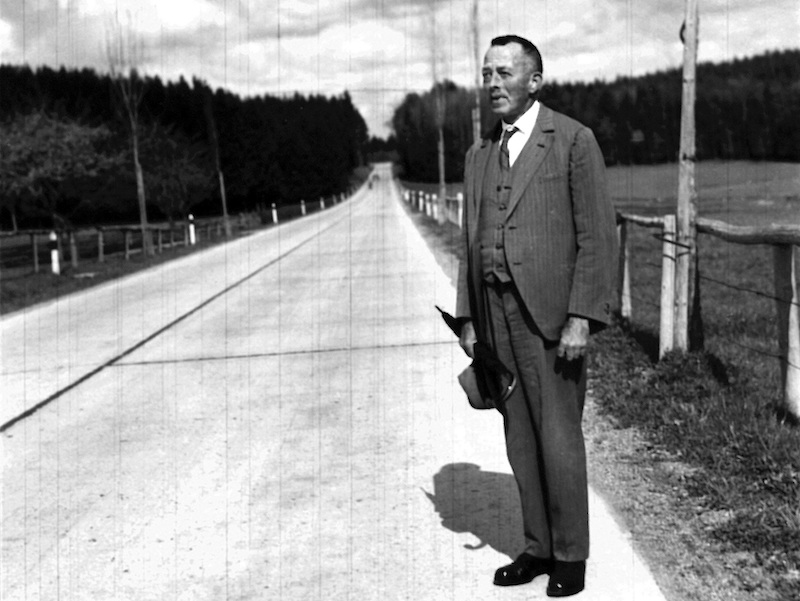
Robert Walser
Robert Walser (1878-1956) is the dreamy
confectionary snowflake of German language fiction. He also might be the
single most underrated writer of the 20th century. Even though his
prose is quite delicious—and no matter how many times his perfect novel,
Jakob Von Gunten, is reissued — booksellers rarely stock him.
Walser is a sentence artist of the highest magnitude who spent his last
27 years in an asylum in Switzerland.
James Salter, Carson McCullers, Percival Everett, Langston Hughes, Jim Harrison, Edward St. Aubyn, John Williams, Alice Munro, Gayl Jones, Christina Stead, Marcel Schwob, Chester Himes, Henry Green ... [mehr]
Abonnieren
Posts (Atom)