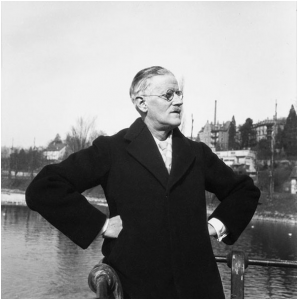
In Joyce’s three previous books he had explored and mastered the limits of the short story and the autobiographical novel, and then proceeded to write a maximalist “avant-garde” novel, Ulysses (1922), that was arguably three-to-four decades ahead of its time. In baseball terms, Ulysses remains the equivalent of Joe DiMaggio’s 56-game hitting streak in 1941. A record of human achievement that is unassailable and will forever remain a sacred Mount Sanai for writers across the globe.
Yet this great book burdened Joyce too. Like DiMaggio, he had to know his achievement was not repeatable. “In Dubliners he had explored the waking consciousness from outside, in A Portrait and Ulysses from inside,” Ellmann wrote. “He had begun to impinge, but gingerly, upon the mind of sleep…that the great psychological discovery of the century was the night world he was, of course, aware.”
Ellmann, we can’t forget, is referring to the writings and work of Sigmund Freud and his psychoanalytic theory, which was an intellectual bombshell of the early 20th Century that was only rivaled by Einstein’s Theory of General Relativity. In Finnegans Wake Joyce was looking to create an entirely new language for the new territory of the unconscious, of sleep, of the dream world. ... [mehr] https://www.3quarksdaily.com/3quarksdaily/2019/02/finnegans-wake-dreaming-of-the-everything-novel.html
Keine Kommentare:
Kommentar veröffentlichen